j

Raman Scattering

Raman Scattering

Source: Edmund Optics Understanding Raman Scattering in Optical Media Understanding Raman Scattering in Optical Media The Nature of Raman Scattering Raman scattering is a phenomenon that occurs when light interacts with the molecular vibrations in a medium, resulting in a change in the light’s wavelength. This process is named after the Indian physicist C.V. Raman, […]

Raman Scattering Read More »

Terahertz Radiation

Terahertz Radiation

Source: Wikipedia The Fascinating World of Terahertz Radiation Understanding Terahertz Radiation Terahertz radiation falls within the frequency range of approximately 0.1 THz to 10 THz, corresponding to wavelengths from 3 mm down to 30 μm. This places it between radio waves/microwaves and infrared light. Terahertz radiation is sometimes referred to as submillimeter radiation due to

Terahertz Radiation Read More »

Transition Cross-Sections

Transition Cross-Sections

Source: ResearchGate Understanding Transition Cross-sections in Laser Physics In laser physics, transition cross-sections play a crucial role in determining the likelihood of optically induced transition events such as absorption or stimulated emission. These cross-sections quantify the rate of transitions for a laser ion in a specific electronic state, which is influenced by the photon flux

Transition Cross-Sections Read More »

Kuizenga–Siegman Theory

Kuizenga–Siegman Theory

Source: Nature The Kuizenga–Siegman Theory in Laser Physics The Kuizenga–Siegman theory is a theoretical framework used to calculate the pulse duration of an actively mode-locked laser. In this theory, two main mechanisms influence the duration of the circulating pulse: the modulator, which attenuates the pulse wings, reducing the pulse duration, and the gain medium, which

Kuizenga–Siegman Theory Read More »

Delayed Nonlinear Response

Delayed Nonlinear Response

Source: ResearchGate The Concept of Delayed Nonlinear Response in Optics Understanding Nonlinear Response in Transparent Optical Materials Nonlinear optics involves nonlinearities in transparent optical materials described by a nonlinear polarization that does not depend on the electric field strength at earlier times. One common nonlinearity is a polarization proportional to the third power of the

Delayed Nonlinear Response Read More »

Vanadate Lasers

Vanadate Lasers

Source: MDPI The World of Vanadate Lasers Introduction to Vanadate Lasers Vanadate lasers are based on neodymium-doped vanadate crystals, such as yttrium vanadate (Nd:YVO4), gadolinium vanadate (Nd:GdVO4), and lutetium vanadate (Nd:LuVO4). These materials are also known as orthovanadates. Initially, the growth of high-quality vanadate crystals was challenging, but advancements in crystal growth techniques and the

Vanadate Lasers Read More »

Polarization Mode Dispersion

Polarization Mode Dispersion

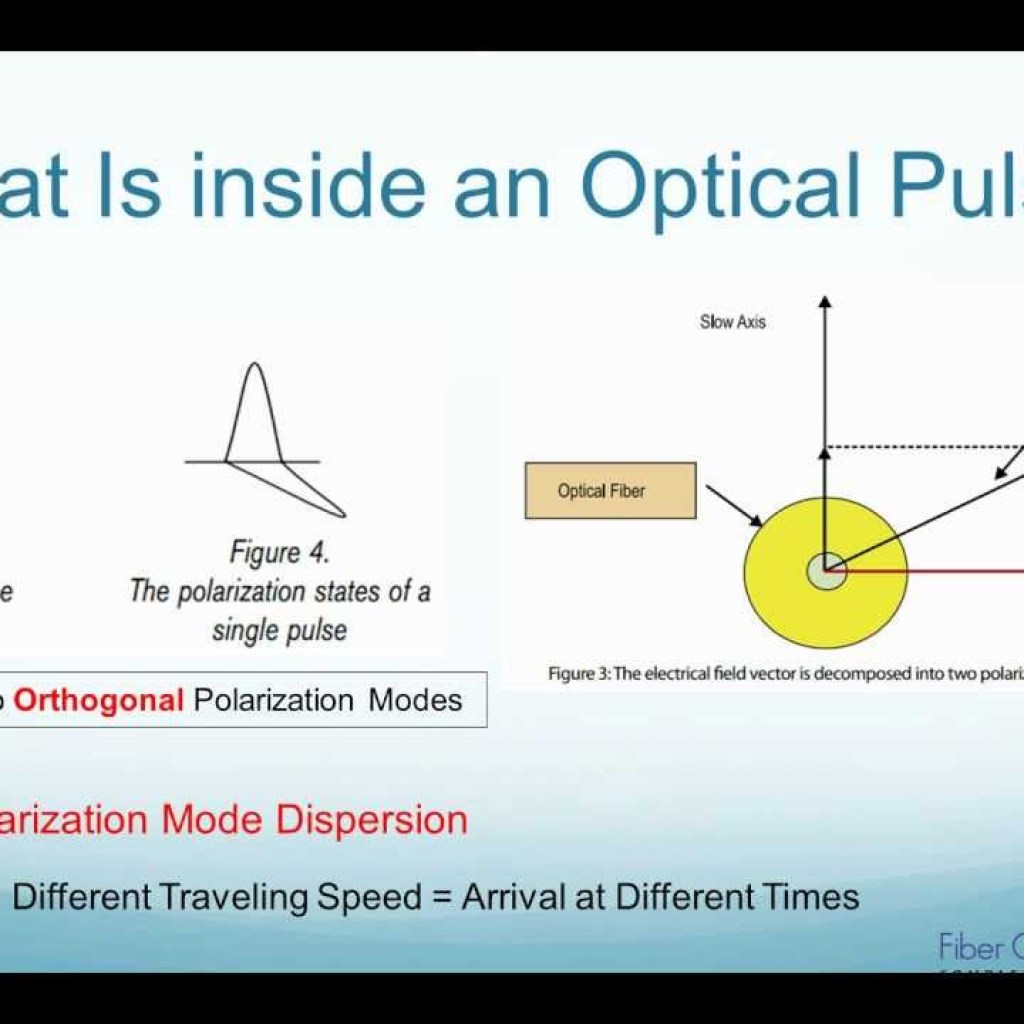
Source: YouTube Understanding Polarization Mode Dispersion in Optical Fibers Understanding Polarization Mode Dispersion in Optical Fibers Introduction to Polarization Mode Dispersion (PMD) Polarization Mode Dispersion (PMD) is a critical factor affecting the performance of optical fibers used in telecommunications. It arises due to slight differences in the propagation characteristics of light waves with varying polarization

Polarization Mode Dispersion Read More »

Photodarkening

Photodarkening

Source: MDPI Understanding Photodarkening in Optical Materials Photodarkening in Optical Materials Introduction Photodarkening is a phenomenon observed in various transparent optical materials such as optical fibers, laser crystals, and nonlinear crystal materials. It refers to the increase in propagation losses over time when these materials are exposed to specific light wavelengths. This article explores the

Photodarkening Read More »

Microbends Of Fibers

Microbends Of Fibers

Source: Fosco Connect Understanding Microbends in Optical Fibers Understanding Microbends in Optical Fibers Introduction to Microbends Microbends are tiny, often microscopic, deformations in optical fibers that can lead to significant propagation losses. These bends are not visibly apparent but can affect the performance of optical fibers by causing bend-induced losses and impacting polarization mode dispersion.

Microbends Of Fibers Read More »

Scroll to Top