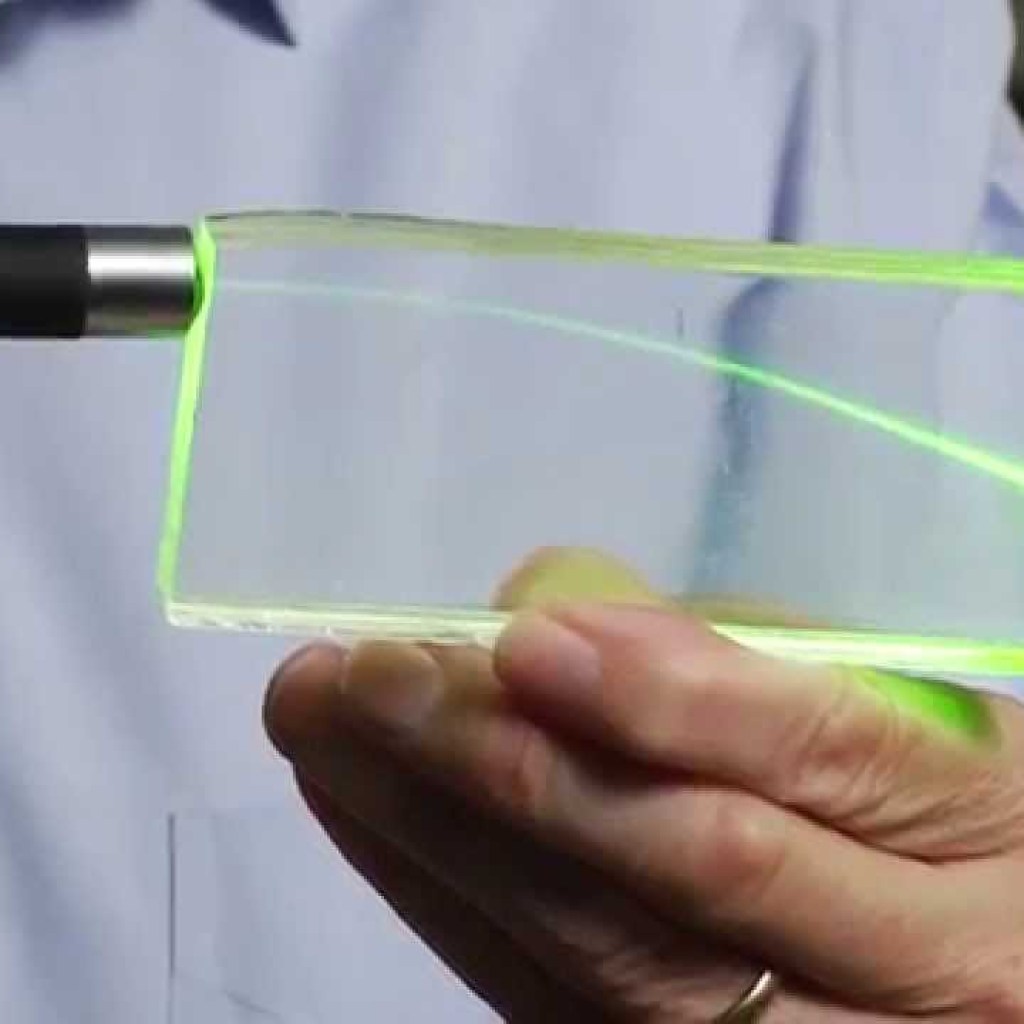
lens

Thermal Lensing

Thermal Lensing

Source: link.springer.com Understanding Thermal Lensing in Laser Systems Introduction to Thermal Lensing Thermal lensing is a phenomenon that occurs in high-power lasers due to the inhomogeneous heating of the gain medium, such as a laser crystal. This heating leads to a thermal lens effect, causing changes in the refractive index of the medium, which can […]

Thermal Lensing Read More »

Kerr Lens

Kerr Lens

Source: Wikipedia Understanding Kerr Lens Effect in Optics When a short optical pulse travels through a nonlinear medium, it experiences the Kerr effect, causing an optical phase delay. This effect is most significant at the beam axis where the optical intensity is highest. The Kerr effect acts like a lens, deforming wavefronts and focusing the

Kerr Lens Read More »

Rod Lenses

Rod Lenses

Source: Endoscopeparts.com · Auf Lager Understanding Rod Lenses in Optics Understanding Rod Lenses in Optics Overview A rod lens is a cylindrical lens with a polished mantle and flat end surfaces. It is used for applications such as collimating beams, focusing light to a line, and imaging. Rod lenses are available in various optical materials and sizes,

Rod Lenses Read More »

Gradient-Index Lenses

Gradient-Index Lenses

Source: YouTube The Function of Gradient-Index Lenses Gradient-index lenses (GRIN lenses) play a crucial role in manipulating the optical phase of a beam, resulting in wavefront curvature that can either converge or diverge a beam. Unlike conventional lenses that vary thickness for phase delay, GRIN lenses have a constant thickness with a radial variation in

Gradient-Index Lenses Read More »

Geometrical Optics

Geometrical Optics

Source: Britannica Understanding Geometrical Optics in Optics Introduction to Geometrical Optics Geometrical optics, also known as ray optics, is a fundamental concept in optics that describes the propagation of light using geometric light rays. This approach assumes that light rays have no thickness, travel in straight lines in homogeneous materials, and follow specific laws when

Geometrical Optics Read More »

Axicons

Axicons

Source: Wikipedia Understanding Axicons: The Conical Optical Devices Understanding Axicons: The Conical Optical Devices Introduction to Axicons An axicon, also known as an axicon lens, is a unique optical device distinguished by its conical surface, unlike traditional lenses that have curved surfaces. Typically, an axicon features one conical side with its tip pointing outward, while

Axicons Read More »

Magnifying Glasses

Magnifying Glasses

Source: eBay · Auf Lager Magnifying Glasses: A Closer Look Introduction to Magnifying Glasses Magnifying glasses are simple optical devices that are used to view objects with magnification. While they are similar to loupes, magnifying glasses are held at a larger distance from the eye and have a longer focal length, typically around 125 mm or more.

Magnifying Glasses Read More »

Field Lenses

Field Lenses

Source: The Wandering Lensman Understanding Field Lenses in Optical Systems Understanding Field Lenses in Optical Systems Introduction to Field Lenses Field lenses play a crucial role in optical systems by expanding the field of view. They are used in various applications, such as telescopes and illumination systems, to address specific optical challenges. Although the term

Field Lenses Read More »

Image Planes

Image Planes

Source: California Aeronautical University Understanding Image Planes in Optics Understanding Image Planes in Optics What are Image Planes? When analyzing optical instruments like telescopes or microscopes, image planes play a crucial role. An image plane is where a sharp image of object points from the object plane appears, at least in ideal Gaussian optics. In

Image Planes Read More »

Ocular Lenses

Ocular Lenses

Source: Viewlight USA Understanding Ocular Lenses in Optical Instruments Understanding Ocular Lenses in Optical Instruments Ocular lenses, also known as eyepieces, are integral components of various optical instruments, including telescopes, microscopes, and infrared viewers. These lenses are positioned on the side of the observing eye and play a crucial role in magnifying images for detailed

Ocular Lenses Read More »

Scroll to Top