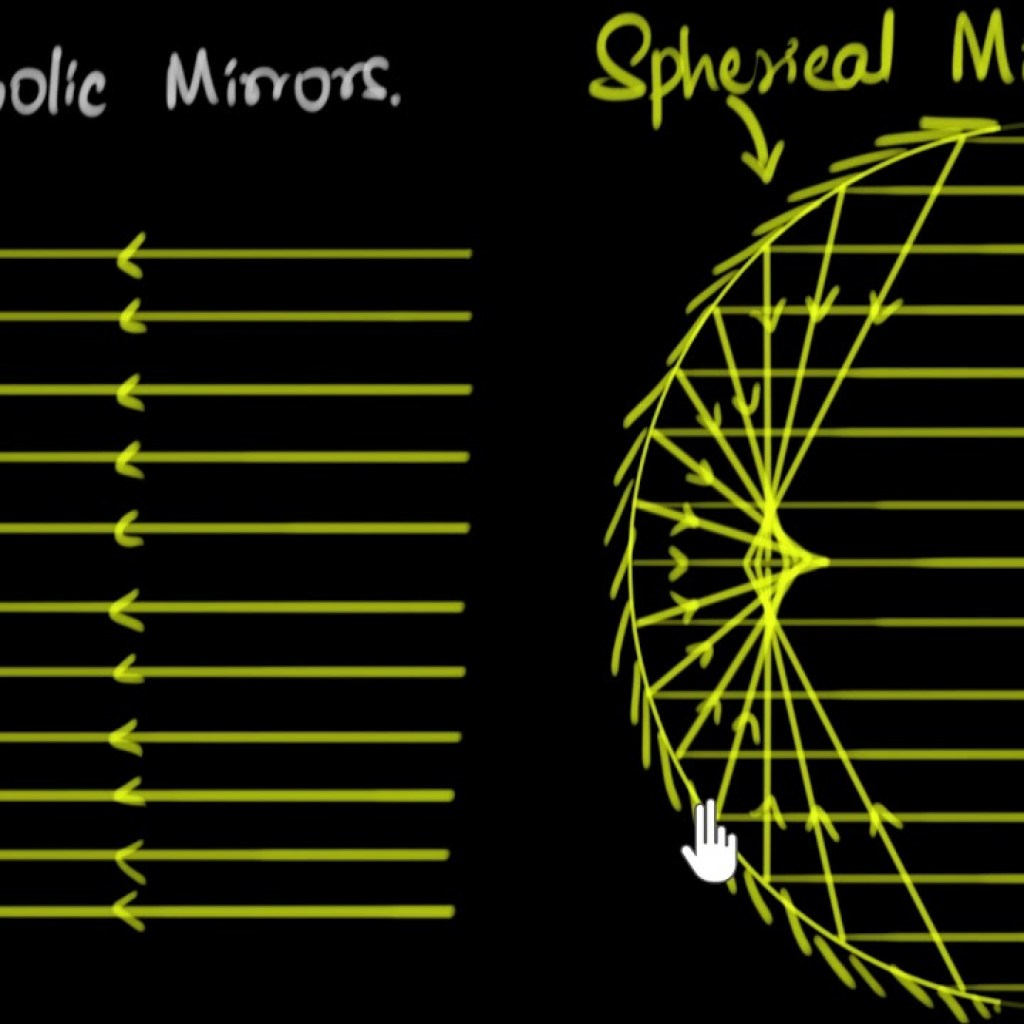
mirrors

Dispersive Mirrors

Dispersive Mirrors

Source: OPTOMAN Understanding Dispersive Mirrors in Laser Optics What are Dispersive Mirrors? Dispersive mirrors are specialized mirrors used in laser optics that introduce chromatic dispersion. They are essential for applications like dispersion compensation in laser resonators, pulse compression, and other femtosecond laser optics and signal processing tasks. Types of Dispersive Mirrors Dispersive mirrors are typically […]

Dispersive Mirrors Read More »

Fabry–Pérot Interferometers

Fabry–Pérot Interferometers

Source: Nature The Fabry–Pérot Interferometer: An Overview Operation Principle A Fabry–Pérot interferometer consists of two highly reflective mirrors with some transmissivity, forming a resonator with sharp resonances in transmission. In resonance, the input and circulating waves constructively interfere, leading to minimal reflection. In anti-resonance, most radiation is reflected. Frequency-Dependent Transmittance The resonance frequencies can be

Fabry–Pérot Interferometers Read More »

Large Diameter Optics

Large Diameter Optics

Source: Amazon.com · Auf Lager Large Optical Elements in Photonics Large Optical Elements in Photonics Introduction Large optical elements play a crucial role in various photonics applications, ranging from astronomical telescopes to laser systems. These elements are essential for achieving high precision imaging, laser beam manipulation, and ultrashort pulse compression. Applications Requiring Large Optical Elements Imaging Purposes

Large Diameter Optics Read More »

Standing-Wave Resonators

Standing-Wave Resonators

Source: De Gruyter Understanding Standing-Wave Resonators in Optics Introduction to Standing-Wave Resonators Standing-wave resonators, also known as linear resonators, are optical setups consisting of two or more mirrors where light is reflected with normal incidence on two end mirrors. This configuration creates a standing wave within the resonator, formed by two counter-propagating optical waves. In

Standing-Wave Resonators Read More »

Metal-Coated Mirrors

Metal-Coated Mirrors

Source: Accurate Optics Understanding Metal-Coated Mirrors in Optics Understanding Metal-Coated Mirrors in Optics Metal-coated mirrors are a crucial component in the field of optics, offering unique advantages and specific applications that differentiate them from other types of mirrors. These mirrors are characterized by a thin metal coating applied to a substrate, typically using vacuum evaporation

Metal-Coated Mirrors Read More »

Parabolic Mirrors

Parabolic Mirrors

Source: YouTube The Versatility of Parabolic Mirrors in Optics Understanding Parabolic Mirrors Parabolic mirrors, also known as parabolic reflectors, are mirrors with a cross-section shaped like a parabola. They have the unique property of reflecting incoming parallel rays into a single focal point. This characteristic makes them ideal for focusing collimated beams precisely, without spherical

Parabolic Mirrors Read More »

Multipass Gas Cells

Multipass Gas Cells

Source: MDPI Understanding Multipass Gas Cells in Laser Spectroscopy Introduction In laser spectroscopy, measuring the absorption coefficient of light in a gas is crucial for various applications. This is often achieved using multipass gas cells to enhance sensitivity and path length of the light within the gas. Importance of Multipass Gas Cells Multipass gas cells

Multipass Gas Cells Read More »

Bragg Mirrors

Bragg Mirrors

Source: Omega Optical The Science of Bragg Mirrors Understanding Bragg Mirrors A Bragg mirror, also known as a distributed Bragg reflector, is a specialized mirror structure composed of alternating layers of two different optical materials. The design commonly used is the quarter-wave mirror, where each layer’s thickness corresponds to a quarter of the wavelength the

Bragg Mirrors Read More »

Output Couplers

Output Couplers

Source: Wikipedia Understanding Output Couplers in Laser Systems Output Couplers in Laser Systems Introduction An output coupler is a crucial component in a laser resonator that plays a significant role in determining the performance of the laser system. It is a semi-transparent dielectric mirror designed to transmit a portion of the intracavity optical power to

Output Couplers Read More »

Mirrors

Mirrors

Source: IKEA · Auf Lager Mirrors in Optics and Photonics Introduction to Mirrors A mirror is an optical device that reflects light, with the reflection being of a specular type where the angle of reflection equals the angle of incidence. Reflective diffusers and diffraction gratings are not considered mirrors. Mirrors can have flat or curved surfaces, with

Mirrors Read More »

Scroll to Top